Market gap confirmed
No competitor addressed pre-sleep routine execution
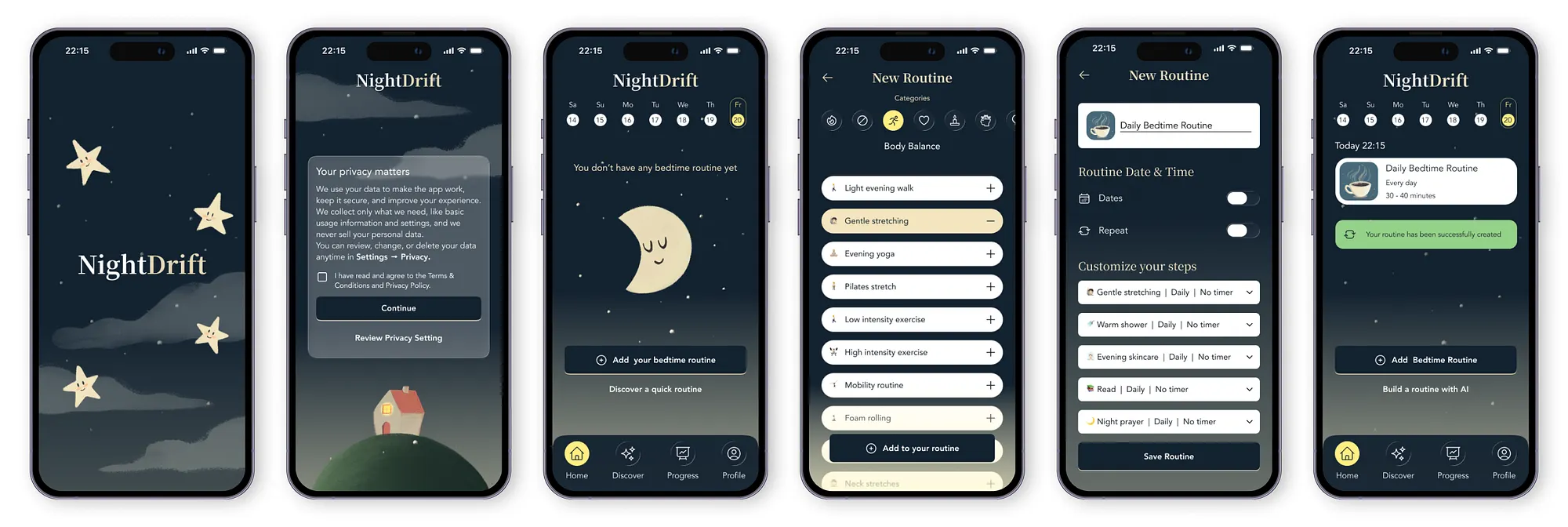
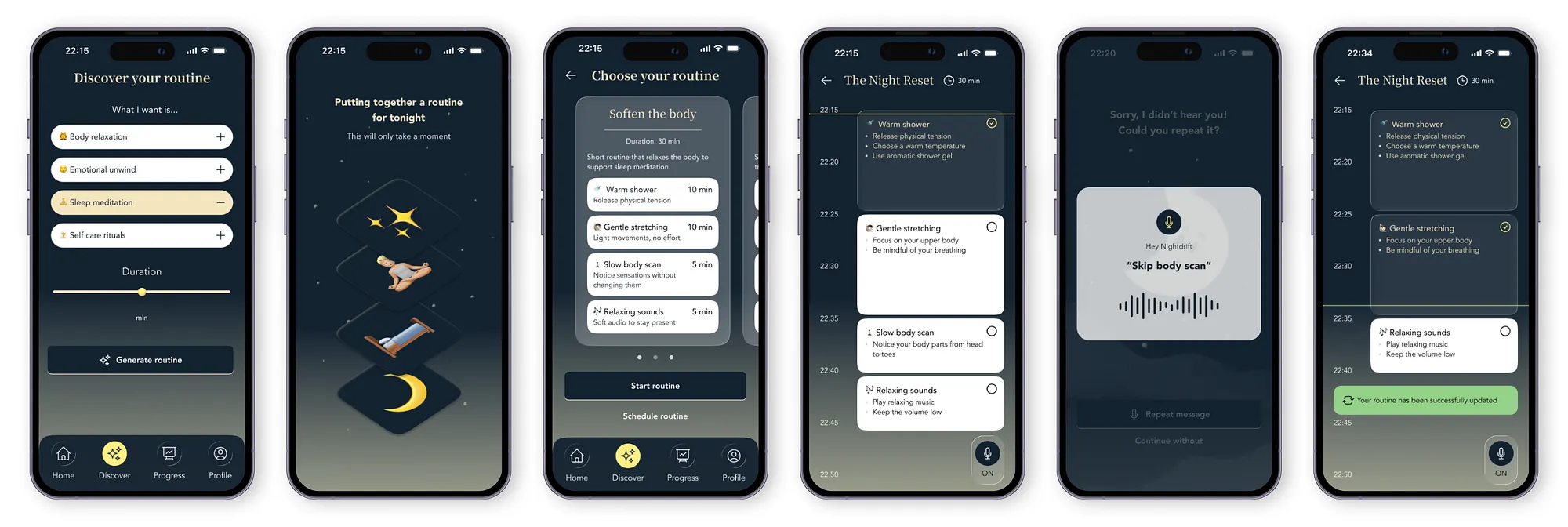
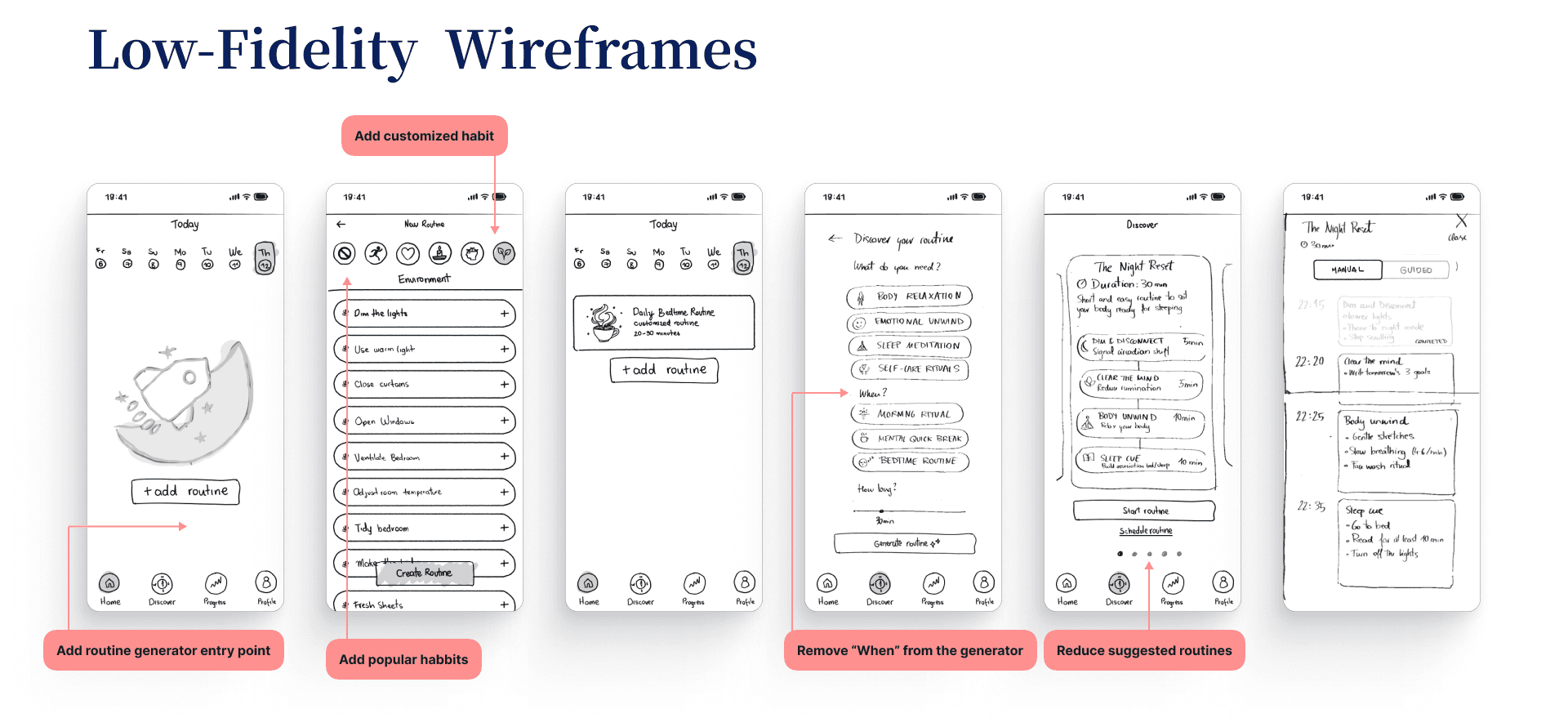
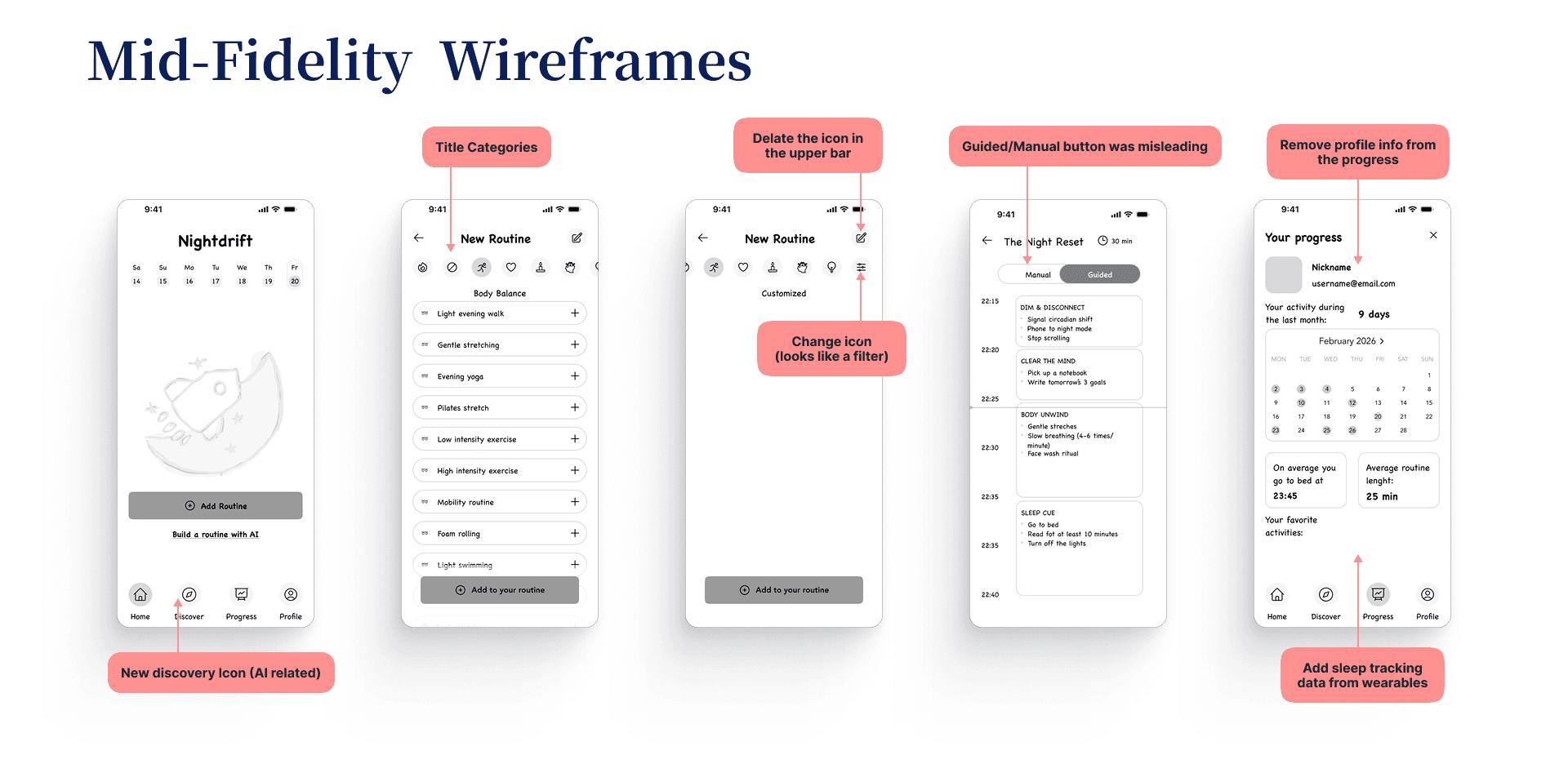
Two interaction modes
Designed for high and low energy states before sleep
Desirability testing
Strong alignment with calm, comfort and helpfulness
The problem worth designing for
Sleep is widely understood as essential. The products designed around it are mostly built around the same assumption: that users need more data, more insight, more coaching. Tracking apps measure what happened. Meditation apps help you wind down. None of them focused on the specific moment when the day is ending, energy is gone, and the intention to have a good night quietly dissolves into scrolling on the couch.
The competitive analysis confirmed this. Across the market, the pre-sleep window, the hour or two before sleep where behaviour actually determines rest quality, was largely unaddressed. That became the focus.

What the research showed
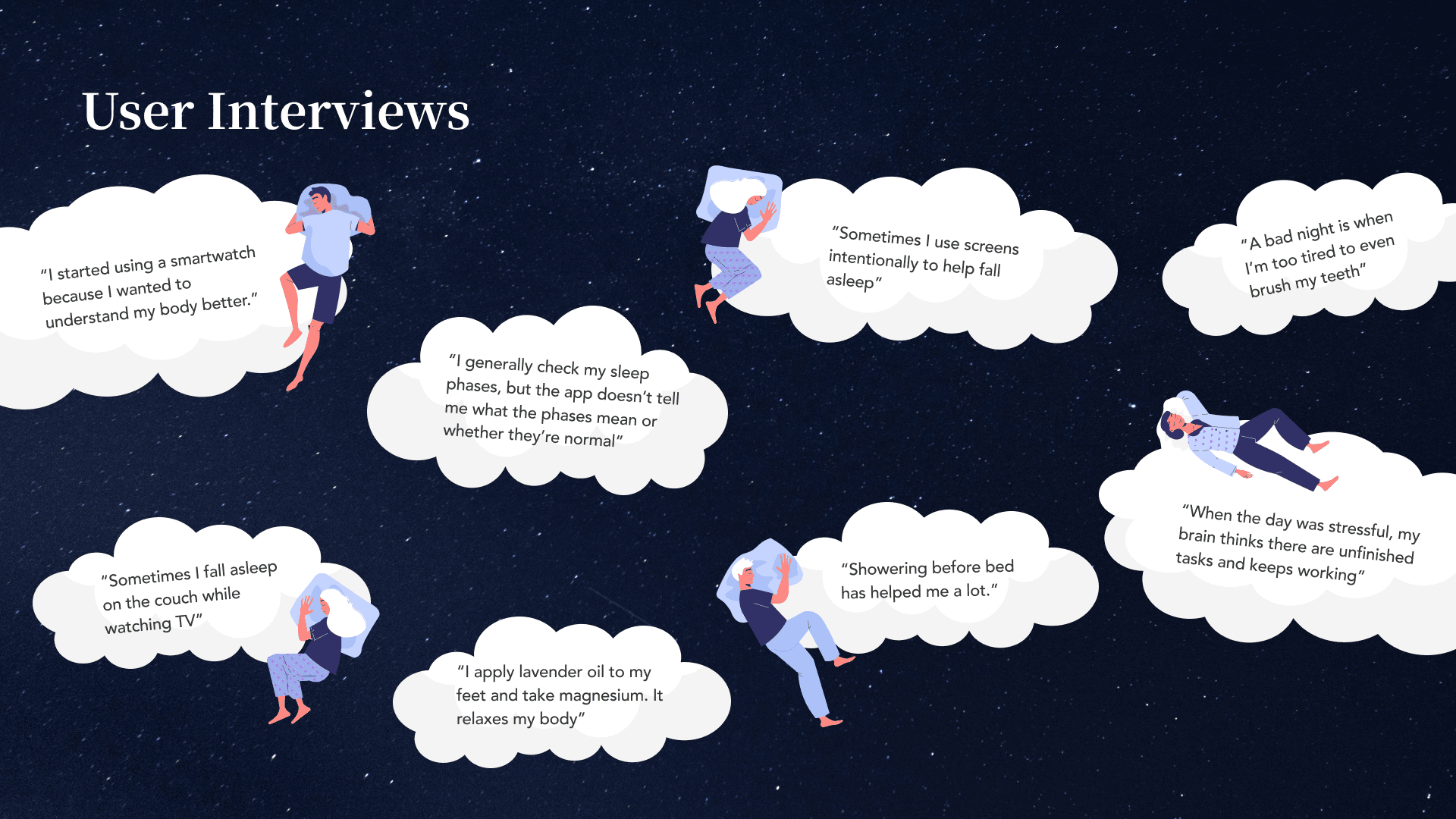
We combined a survey with user interviews and found a consistent pattern. People were not going to bed late because they did not know better. They were going to bed late because the transition from being awake to actually starting a bedtime routine required more energy than they had left.
Several participants described falling asleep unintentionally on the couch. Others used screens deliberately to unwind, knowing it was not ideal but finding it the path of least resistance. Small personal rituals, a shower, stretching, reading, existed but broke down after demanding days.
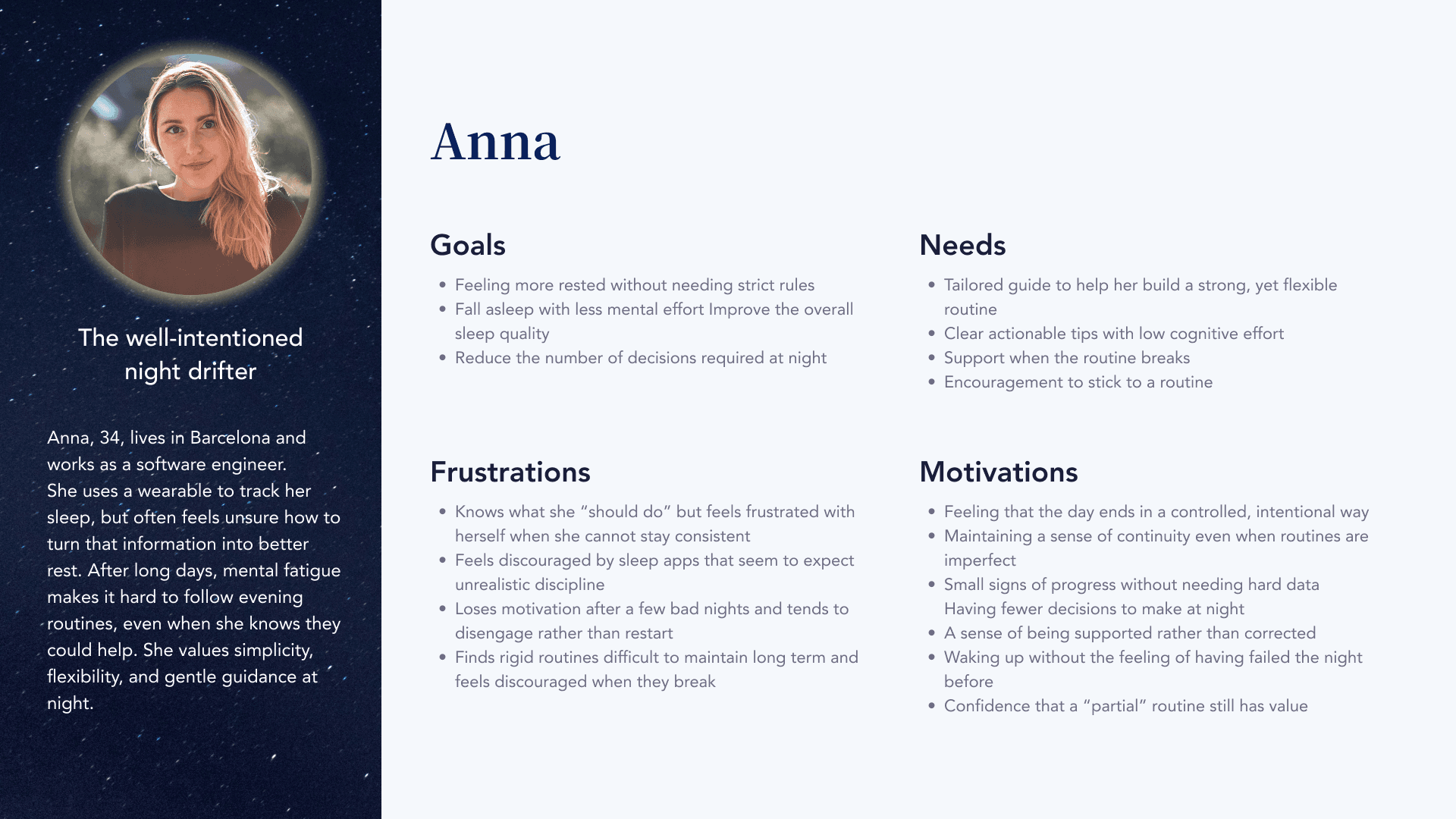
One distinction that came out of the research shaped the entire design direction: these users were exhausted but not asleep. They were in a state of low energy passive delay. The app needed to work with that state, not against it.