Exit Pop up

A proven conversion component had been left untouched for too long. Expanding it to mobile and refreshing the UI drove a 123% increase in first-time deposits.

Exit Pop up

A proven conversion component had been left untouched for too long. Expanding it to mobile and refreshing the UI drove a 123% increase in first-time deposits.

COMPANY

Blexr

Role

UX/UI Designer

COMPANY

Blexr

Role

UX/UI Designer

COMPANY

Blexr

Role

UX/UI Designer

First-time deposits

+123%

Delivery phases

2

Content independence

CMS, no dev required

The problem

The problem

The exit pop-up on VegasSlotsOnline had been converting consistently for years. That consistency was also the reason it had been left alone. By the time we looked at it closely, it was desktop only, visually dated, and running on a legacy tech stack that required developer involvement for any content update.

The commercial team's historical data confirmed it was one of the most reliable sources of first-time deposits on the site. A component with proven conversion value was reaching less than half the user base, could not be localised without a dev handoff, and had a UI that previous experiments had linked to lower trust perception.

The hypothesis

The hypothesis

Expanding device coverage would recover conversions not happening on mobile. A visual refresh aligned with patterns that had performed in earlier experiments would lift trust and push conversion further. Rebuilding the underlying tech would remove the operational friction that had been quietly accumulating.

The approach

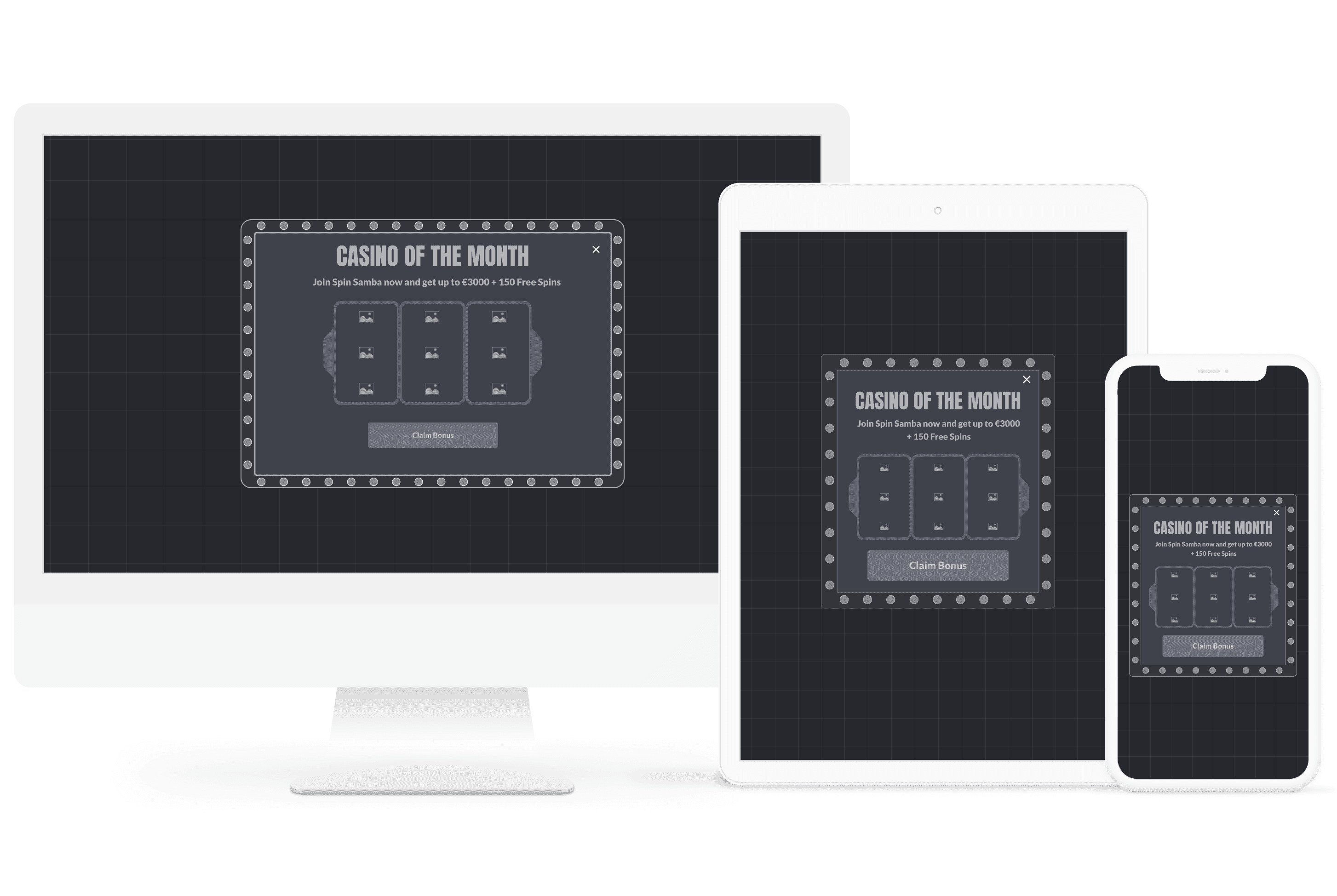
Rather than shipping everything at once, we structured the work into two phases. The first focused on functional expansion: extending the component to mobile and tablet, with interaction patterns adapted for touchscreen, and exit-intent detection rebuilt for non-desktop contexts. FTDs held and began to climb.

With phase one validated, we moved to a visual redesign using dynamic colours within brand guidelines, informed by patterns from earlier conversion experiments. Post-release, FTDs increased 123% against the pre-optimisation baseline.

The outcome

The rebuild resolved the operational dependency that had been slowing content updates. After launch, the content team could manage and localise offers directly through the CMS without requiring a developer. Post-launch research indicated an improvement in perceived trust compared to the original component.

Takeaway

A component that is functional but neglected accumulates invisible costs: narrower reach, manual processes, and a UI that quietly erodes trust. Framing the intervention around those costs, rather than around a redesign, made the case easier to move forward and the outcome easier to attribute.

The approach

Rather than shipping everything at once, we structured the work into two phases. The first focused on functional expansion: extending the component to mobile and tablet, with interaction patterns adapted for touchscreen, and exit-intent detection rebuilt for non-desktop contexts. FTDs held and began to climb.

With phase one validated, we moved to a visual redesign using dynamic colours within brand guidelines, informed by patterns from earlier conversion experiments. Post-release, FTDs increased 123% against the pre-optimisation baseline.

The approach

Rather than shipping everything at once, we structured the work into two phases. The first focused on functional expansion: extending the component to mobile and tablet, with interaction patterns adapted for touchscreen, and exit-intent detection rebuilt for non-desktop contexts. FTDs held and began to climb.

With phase one validated, we moved to a visual redesign using dynamic colours within brand guidelines, informed by patterns from earlier conversion experiments. Post-release, FTDs increased 123% against the pre-optimisation baseline.

The outcome

The rebuild resolved the operational dependency that had been slowing content updates. After launch, the content team could manage and localise offers directly through the CMS without requiring a developer. Post-launch research indicated an improvement in perceived trust compared to the original component.

The outcome

The rebuild resolved the operational dependency that had been slowing content updates. After launch, the content team could manage and localise offers directly through the CMS without requiring a developer. Post-launch research indicated an improvement in perceived trust compared to the original component.

Takeaway

A component that is functional but neglected accumulates invisible costs: narrower reach, manual processes, and a UI that quietly erodes trust. Framing the intervention around those costs, rather than around a redesign, made the case easier to move forward and the outcome easier to attribute.

Takeaway

A component that is functional but neglected accumulates invisible costs: narrower reach, manual processes, and a UI that quietly erodes trust. Framing the intervention around those costs, rather than around a redesign, made the case easier to move forward and the outcome easier to attribute.